
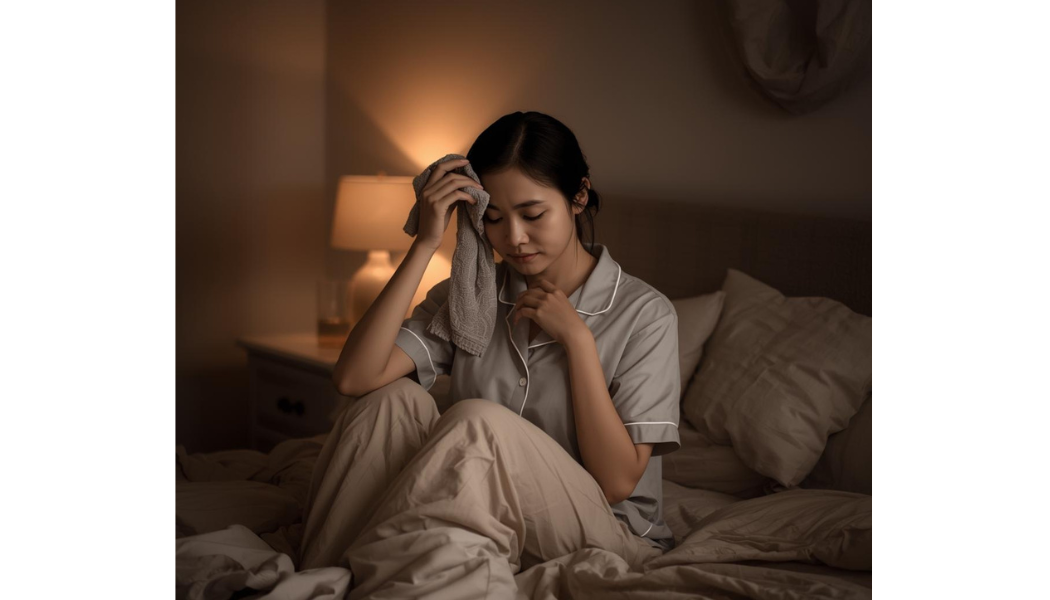
If you’ve woken up drenched in sweat in the middle of the night — pajamas soaked, sheets damp, wondering “What is happening to my body?” — lets talk about it…
Postpartum night sweats are extremely common, surprisingly intense, and almost never talked about until you’re already experiencing them.
It can feel alarming. You just had a baby. You’re exhausted. Your body already feels unfamiliar. And now you’re waking up feeling like you ran a marathon in your sleep.
Here’s the reassuring truth: postpartum night sweats are normal and usually temporary.
In This Article…
- Why night sweats happen after birth
- How long they last
- What’s normal vs what’s not
- How to manage them at home
- When to call your doctor
You are not broken. Your body is adjusting.
What Are Postpartum Night Sweats?
Postpartum night sweats are episodes of heavy sweating that occur in the days or weeks after giving birth. They’re most common at night (hence the name), but some women notice increased sweating during the day too.
They can feel:
- Sudden
- Intense
- Soaking (clothes or sheets)
- Accompanied by warmth or flushing
Even if you’re in an air-conditioned room.
The biggest surprise for most moms? Just how extreme they can feel.
Why Do Night Sweats Happen After Birth?
There are two main reasons your body turns into a furnace after delivery.
1. Hormone Drops (The Big One)
After birth, estrogen and progesterone levels drop dramatically — almost overnight.
Estrogen helps regulate body temperature. When levels fall quickly, your body temporarily struggles to control heat the way it normally would.
The result?
- Hot flashes
- Night sweats
- Temperature swings
It’s very similar to what women experience during menopause — just triggered by childbirth instead of aging.
2. Fluid Shifts
During pregnancy, your body retains a significant amount of extra fluid. After delivery, your body works to get rid of that excess fluid.
You’ll notice this through:
- Increased urination
- Postpartum swelling decreasing
- And yes… sweating
Your body is literally eliminating extra pregnancy fluid.
When Do Postpartum Night Sweats Start?
Most women notice night sweats:
- Within the first few days after birth
- Or during the first 1–2 weeks postpartum
They often peak early — around the same time postpartum bleeding is heaviest.
How Long Does Postpartum Bleeding Last? (Lochia Timeline)
These two symptoms frequently overlap in the early healing phase.
How Long Do Postpartum Night Sweats Last?
For most women, night sweats improve significantly by:
- 2 weeks postpartum
- Or within 4–6 weeks as hormones stabilize
Some women experience milder sweating for a bit longer, especially if:
- They are breastfeeding (which affects hormones)
- They had large fluid retention during pregnancy
The key reassurance:
They are temporary.
Are Postpartum Night Sweats Worse If You’re Breastfeeding?
They can be.
Breastfeeding triggers the release of oxytocin and influences estrogen levels. Lower estrogen levels during breastfeeding can prolong temperature regulation shifts.
This doesn’t mean something is wrong — just that your hormone landscape is still adjusting.
Some moms also notice sweating during breastfeeding sessions, especially in the early weeks.
What’s Normal vs Not Normal?
This is usually what moms really want to know.
Normal:
- Waking up damp or sweaty for 1–3 weeks
- Needing to change pajamas at night
- Sweating even when the room is cool
- Mild body odor change
- Sweating that gradually improves
Not Normal:
- Fever over 100.4°F (38°C)
- Chills with shaking
- Foul-smelling vaginal discharge
- Severe headache + high blood pressure symptoms
- Night sweats lasting many months without improvement
Night sweats alone? Usually hormonal.
Night sweats + fever or infection signs? Call your provider.
When to Call Your Doctor
Call your healthcare provider if:
- You have a fever
- You experience intense chills or flu-like symptoms
- You feel lightheaded or faint
- Sweating is accompanied by severe abdominal or pelvic pain
- You’re worried, even if you can’t pinpoint why
You deserve reassurance, not self-doubt.
How to Manage Postpartum Night Sweats at Home
While you can’t immediately stop hormonal shifts, you can make yourself more comfortable.
1. Layer Your Bedding
Use:
- Lightweight pajamas
- Breathable fabrics (cotton or bamboo)
- Layers you can remove easily
- A spare set of pajamas nearby
2. Protect Your Mattress
A washable mattress cover can save a lot of stress during this phase.
3. Stay Hydrated
Sweating means fluid loss. Keep water by your bed.
4. Cool the Room Slightly
Even a small drop in room temperature can help reduce nighttime discomfort.
5. Don’t Panic
Stress can make temperature shifts feel worse. Remind yourself:
This is temporary. My body is recalibrating.
Frequently Asked Questions:
Why do I smell different postpartum?
Hormonal changes can temporarily alter body odor. Increased sweating plus hormone shifts often cause this. It usually resolves as your hormones stabilize.
Can postpartum night sweats happen during the day?
Yes. They are often called “night sweats,” but temperature regulation changes can occur anytime in the early weeks.
Do night sweats mean I have an infection?
Not usually. Sweating alone is typically hormonal. Sweating plus fever, chills, or foul discharge should be evaluated.
The Bigger Picture: Your Body Is Resetting
Your body just did something extraordinary.
After nine months of hormone shifts, fluid retention, and organ displacement, it’s now returning to baseline. That reset process isn’t always glamorous.
Night sweats feel dramatic — but they are usually just your body clearing fluid and recalibrating estrogen levels.
If you’re in the early weeks, you may also be navigating:
- Postpartum bleeding
- Swelling in your feet and hands
- Emotional swings
- Sleep deprivation
We’ll break down postpartum swelling next — because that question shows up right alongside this one.
For now, know this:
You’re healing.
You’re adjusting.
And sweating at 3am doesn’t mean something is wrong.
It means your body is working.
Medical Disclaimer:
This article is for informational and educational purposes only and is not intended to replace professional medical advice, diagnosis, or treatment. Always consult your healthcare provider with any questions or concerns regarding postpartum symptoms.
References & Further Reading
- American College of Obstetricians and Gynecologists (ACOG). Postpartum Care.
https://www.acog.org/womens-health/faqs/postpartum-care - Mayo Clinic. Postpartum Care: What to Expect.
https://www.mayoclinic.org/healthy-lifestyle/labor-and-delivery/in-depth/postpartum-care/art-20047233 - Cleveland Clinic. Postpartum Hormone Changes.
https://my.clevelandclinic.org/health/articles/9686-postpartum-care - March of Dimes. Your Body After Baby.
https://www.marchofdimes.org/find-support/topics/postpartum/your-body-after-baby