
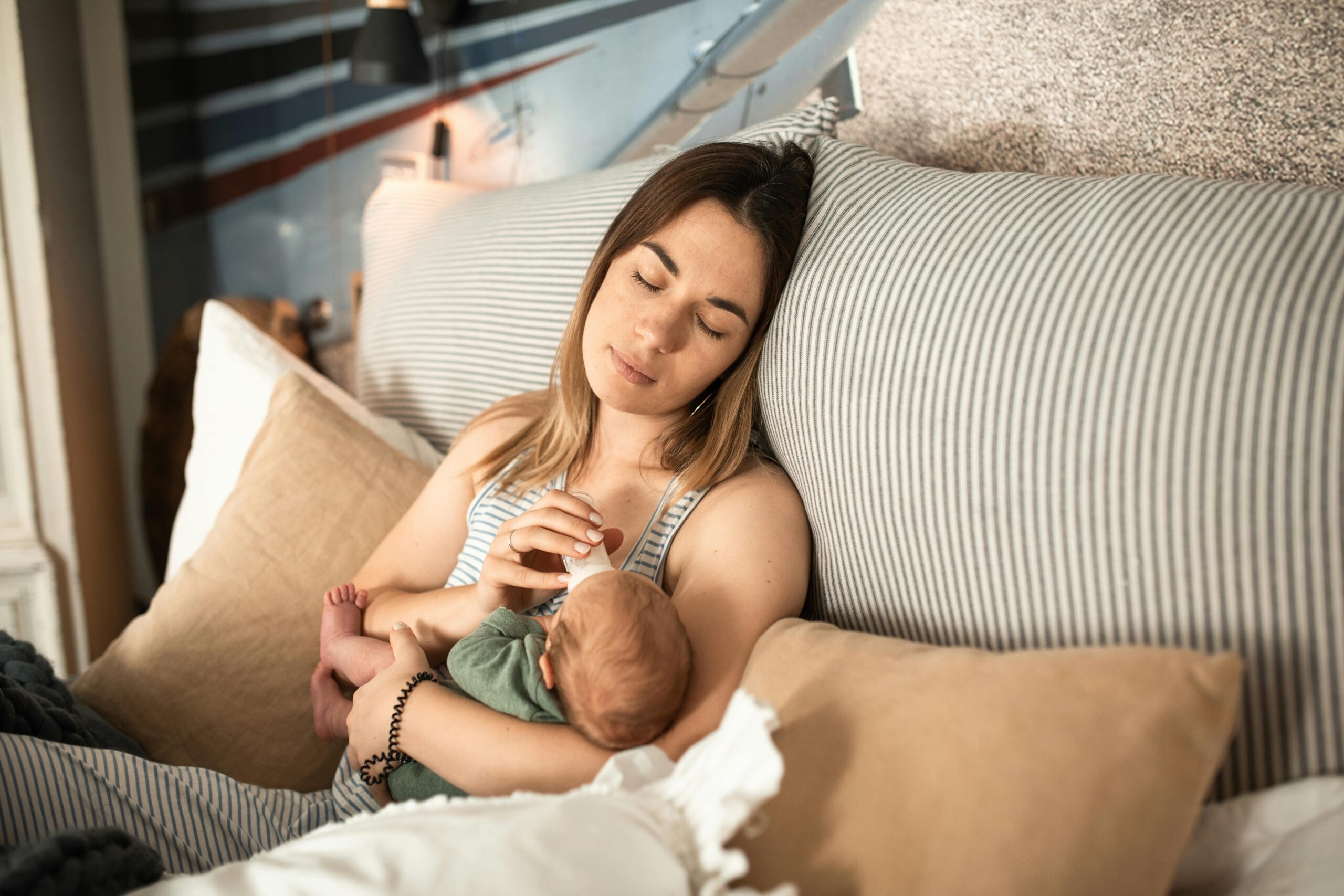
You thought pregnancy hormones were wild? Welcome to the postpartum hormone roller coaster — where you might cry over a diaper commercial, feel rage over someone breathing too loudly, and experience pure euphoria when your baby smiles… all in the span of 20 minutes.
What’s happening to you?
Hormones. All the hormones. Doing all the things.
Your body just spent nine months creating a human being. Now it’s trying to recover from birth, regulate milk production (maybe), survive on broken sleep, and stabilize after the biggest hormonal drop of your life.
Let’s break down what’s actually happening in your body, week by week — and when you can expect to feel more like yourself again.
In This Article
- What happens to hormones immediately after birth
- A week-by-week postpartum hormone timeline
- How breastfeeding affects hormone levels
- Why symptoms like night sweats, hair loss, and mood swings happen
- When your period returns hormonally
- Baby blues vs postpartum depression
- When to seek medical help
You may also find these helpful:
How Long Does Postpartum Bleeding Last? (Lochia Timeline)
Why Am I Sweating So Much After Having a Baby? (Postpartum Night Sweats Guide)
Postpartum Hair Loss: When It Starts & How Long It Lasts
When Will My First Postpartum Period Come Back?

What Happens to Your Hormones After Birth?
During pregnancy, estrogen and progesterone rise to levels up to 100 times higher than normal. Your placenta becomes a hormone-producing powerhouse.
Then you deliver your baby.
And within hours, those hormone levels don’t gently taper off — they plummet.
Estrogen and progesterone crash almost immediately after the placenta is delivered. This is the most dramatic hormonal drop you will likely ever experience.
At the same time:
- Oxytocin surges (the bonding hormone)
- Prolactin rises (milk production hormone)
- Cortisol increases (stress + sleep deprivation)
- Relaxin slowly begins decreasing
- Thyroid hormones can fluctuate in some women
This isn’t a small shift. This is a total hormonal reset.
Immediate Postpartum: First 24–48 Hours
What’s Happening
- Estrogen & progesterone free-fall
- Oxytocin surges with bonding and breastfeeding
- Prolactin begins rising
- Stress hormones elevated
What You Might Feel
- Intense emotional swings
- Euphoria and exhaustion at the same time
- Shaky, sweaty, or chills
- Tearful for no clear reason
Night sweats are especially common during this stage as your body sheds excess fluid and adjusts to the estrogen drop. If you’re waking up soaked, read more here:
Why Am I Sweating So Much After Having a Baby?
Days 2–5: Peak Baby Blues
This is when hormones hit their lowest point.
What’s Happening
- Estrogen and progesterone bottom out
- Milk typically comes in (days 3–4)
- Prolactin surges
- Sleep deprivation begins accumulating
What You Might Feel
- Crying spells
- Overwhelm
- Anxiety
- Emotional volatility
- Breast engorgement
- Heightened sensitivity
Up to 80% of new mothers experience the baby blues during this window. It’s common and typically resolves within two weeks.
If you’re unsure about postpartum bleeding during this stage, you may want to review:
How Long Does Postpartum Bleeding Last?
Weeks 2–6: Hormones Begin Stabilizing
Your hormones aren’t “normal” yet — but they’re no longer crashing.
What’s Happening
- Estrogen/progesterone stabilize at a new low (if breastfeeding)
- Prolactin remains elevated if nursing
- Oxytocin releases during bonding
- Relaxin still present
- Cortisol fluctuating with sleep patterns
What You Might Notice
- Less intense mood swings
- Some emotional sensitivity
- Night sweats continuing
- Deep fatigue
- Brain fog
If breastfeeding, you might feel anxious right before feeding and calmer afterward due to prolactin and oxytocin shifts.
Months 2–3: A New Baseline
This is where postpartum hormone patterns begin separating based on feeding choice.
If Breastfeeding
- Prolactin remains high
- Estrogen remains lower
- Period likely delayed
- Libido often reduced
If Formula Feeding
- Estrogen rises more quickly
- Menstrual cycle may return (6–8 weeks)
If you’re wondering when your cycle should return, read:
When Will My First Postpartum Period Come Back?
What You Might Notice
- Hair shedding begins
- Emotional stability improving
- Fatigue still present
- Libido changes
Hair loss is directly linked to falling estrogen levels. If you’re seeing clumps in the shower, you’re not alone:
You may want to check out : Postpartum Hair Loss Guide
Months 4–6: Continued Hormone Adjustment
For many moms, this is when things start feeling more predictable.
What’s Happening
- Hormones more stable
- Period may return (especially if baby sleeps longer stretches)
- Cortisol improving (if sleep improving)
What You Might Feel
- More emotionally regulated
- Clearer mentally
- Still physically tired (but not hormonally chaotic)
Hair loss may peak here — but it will slow down.
Months 6–12: Gradual Return
For non-breastfeeding moms:
- Hormones near pre-pregnancy levels
- Period cycles established
For breastfeeding moms:
- Hormones remain altered until weaning
- Another shift occurs during weaning
Weaning can feel like a second hormone crash — though usually milder.
Special Hormonal Situations
Postpartum Depression & Anxiety
Baby blues are common. PPD and PPA are different.
Symptoms include:
- Persistent sadness
- Severe anxiety
- Panic attacks
- Difficulty bonding
- Thoughts of harm
If you’re experiencing this, reach out immediately.
You are not weak. You are not failing. This is treatable.
Postpartum Thyroiditis
Occurs in 5–10% of women.
Hyperthyroid symptoms (1–4 months):
- Anxiety
- Racing heart
- Weight loss
Hypothyroid symptoms (4–8 months):
- Depression
- Fatigue
- Weight gain
- Feeling cold
Ask your provider for thyroid labs if symptoms feel extreme or persistent.
How Long Until Hormones Are Normal?
Non-breastfeeding:
- 6–12 weeks (sometimes up to 4 months)
Breastfeeding:
- Remain different until weaning
- 1–3 months post-weaning to fully stabilize
Full postpartum recovery (including hormones) may take 18–24 months.
That timeline surprises a lot of women.
How to Support Your Hormones
Nutrition
- Balanced meals
- Healthy fats (omega-3s)
- Protein
- Hydration
- Continue prenatal vitamin
Sleep
- Sleep when baby sleeps
- Ask for night support
- Reduce nighttime screen exposure
Gentle Movement
- Walking
- Light stretching
- Pelvic floor exercises
Stress Reduction
- Lower expectations
- Accept help
- Connect with other moms
- Therapy if needed
Frequently Asked Questions
How long do postpartum hormones last?
Hormonal shifts stabilize for most women within 3–6 months, but full recovery can take up to 24 months.
Can hormones cause postpartum anxiety?
Yes. Rapid estrogen and progesterone drops plus elevated cortisol can trigger anxiety symptoms.
Why am I so emotional months after birth?
Hormones can remain altered for months, especially during breastfeeding and sleep deprivation phases.
Does breastfeeding delay hormone normalization?
Yes. Elevated prolactin suppresses ovulation and keeps estrogen lower until weaning.
When to Seek Help
Call your provider if:
- Mood symptoms interfere with daily life
- You have thoughts of harm
- Anxiety feels overwhelming
- You’re not improving after 2–3 weeks
- Something simply feels wrong
You don’t get extra credit for suffering silently.
References
- American College of Obstetricians and Gynecologists. (2023). Postpartum Depression and the Baby Blues. ACOG Patient Education. https://www.acog.org/womens-health/faqs/postpartum-depression
- National Institutes of Health. (2024). Postpartum Hormonal Changes. MedlinePlus Medical Encyclopedia. https://medlineplus.gov/ency/article/007213.htm
- Mayo Clinic. (2023). Postpartum Thyroiditis: Symptoms and Treatment. Mayo Clinic Health Information. https://www.mayoclinic.org/diseases-conditions/postpartum-thyroiditis/symptoms-causes/syc-20376237
- Cleveland Clinic. (2024). Understanding Postpartum Hormones. Cleveland Clinic Health Library. https://my.clevelandclinic.org/health/articles/postpartum-hormones
Remember: This article is for informational purposes only and doesn’t replace medical advice from your healthcare provider. Always consult with your doctor about your specific situation, especially if you’re experiencing concerning symptoms or significant mood changes postpartum.