
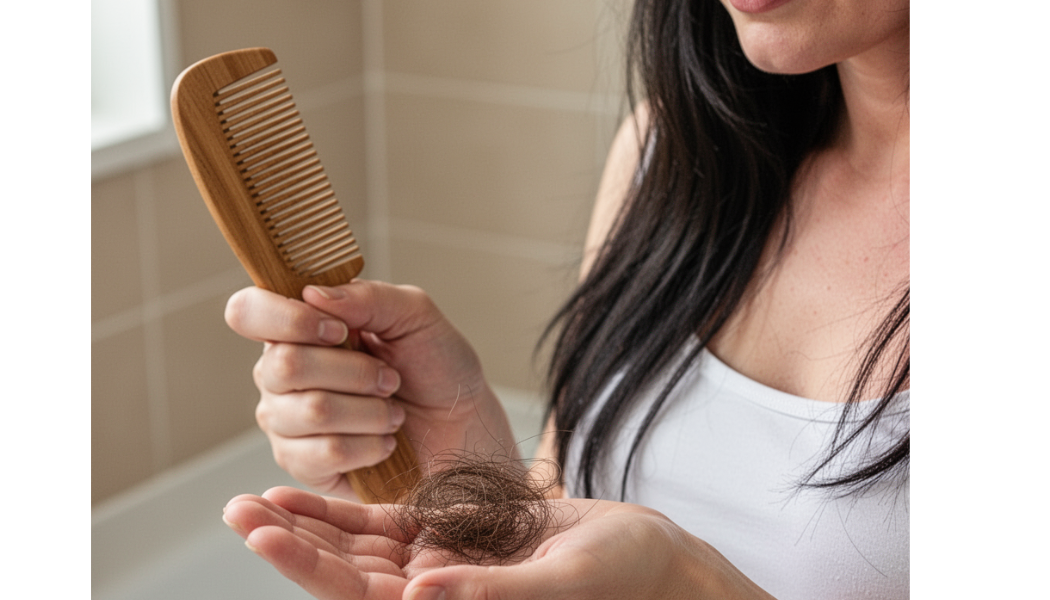
So you’re brushing your hair and pulling out clumps that would make a horror movie director proud. You glance in the mirror and swear your hairline has receded three inches since last week.
Welcome to postpartum hair loss — one of the most distressing (and least discussed) surprises of the fourth trimester.
Here’s what nobody tells you when you’re pregnant and marveling at your thick, lustrous hair: it’s all going to fall out.
Not all of it, of course — you’re not going bald. But for a few months postpartum, it’s going to feel like you might be.
The good news? This is completely normal, temporary, and happens to the vast majority of new moms.
The bad news? It’s still really alarming when you’re living through it.
Let’s talk about what’s actually happening to your hair, when it starts, how long it lasts, and what (if anything) you can do about it.
In This Article
In this guide, we’ll cover:
- What postpartum hair loss actually is
- How long the shedding phase lasts
- How much hair loss is normal
- When to call your doctor
If you’re still early postpartum and navigating other physical shifts, these may help too:
How Long Does Postpartum Bleeding Last? (Lochia Timeline)
Why Am I Sweating So Much After Having a Baby? (Postpartum Night Sweats Guide)
Is Postpartum Swelling Normal? (Feet, Hands & Face Explained)
What Is Postpartum Hair Loss?
Postpartum hair loss — officially called postpartum telogen effluvium — is excessive hair shedding that happens after giving birth.
It’s not actually hair “loss” in the permanent sense. It’s more like your hair is catching up on all the shedding it didn’t do during pregnancy.
During pregnancy:
- Elevated estrogen levels put your hair in a “hold” pattern
- Hairs that would normally shed just… don’t
- More hair stays in the growth phase
Result? Thick, full, glossy pregnancy hair that makes you feel like a shampoo commercial.
But after you deliver your baby, your estrogen levels plummet dramatically.
All those hairs that were supposed to fall out over the past nine months? They all get the eviction notice at once.
That dramatic hormone shift is also why so many moms experience night sweats and other physical changes postpartum.
You may also relate to Why Am I Sweating So Much After Having a Baby?
When Does Postpartum Hair Loss Start?
For most women, postpartum hair loss kicks in around 3–4 months after delivery.
Some moms notice it as early as 2 months postpartum. Others don’t see significant shedding until 5–6 months.
That delay is what makes it so cruel.
You’ve made it through the newborn phase. You’re finally starting to feel somewhat human again. Postpartum bleeding has ended. And then suddenly your hair starts abandoning ship.
If you’re still unsure what was normal during those early recovery weeks, revisit How Long Does Postpartum Bleeding Last? (Lochia Timeline).
Timeline at a Glance
- Weeks 0–8: Still enjoying pregnancy hair
- Months 2–4: Shedding begins
- Months 4–6: Peak shedding (the “is this normal?!” phase)
- Months 6–12: Shedding gradually slows
- 12+ months: Growth returns to baseline
The reason for the delay? Hair grows in cycles — and it takes time for follicles to shift phases after estrogen drops.
This hair growth supplement is all new moms talk about for restoring hair – definetly worth the hype!
How Long Does Postpartum Hair Loss Last?
The shedding phase typically lasts 3–6 months.
For most women:
- By 6–9 months postpartum, shedding slows significantly
- By 9–12 months, baby hairs become visible
- By 12–18 months, fullness starts returning
- By 18–24 months, most women feel “back to normal”
Hair grows about half an inch per month. So even after shedding stops, regrowth takes patience.
You won’t be shedding for two full years — but recovery does take time.
How Much Hair Loss Is Normal?
Let’s put this in perspective.
Normal daily hair loss:
- 50–100 hairs per day
During pregnancy:
- 30–40 hairs (or fewer)
Postpartum peak:
- Up to 300–400 hairs per day
No wonder it feels like you’re going bald.
But remember: you have around 100,000 hairs on your head. Even at peak shedding, you’re losing a small percentage.
It looks dramatic because it’s concentrated.
Where Will You Notice It Most?
Postpartum hair loss is usually most visible:
- Along the hairline
- At the temples
- Around the crown
- In overall ponytail thickness
Many women notice those classic “temple gaps” forming — and yes, they fill back in.
What Regrowth Really Looks Like
Nobody talks enough about the regrowth phase.
Expect:
- Tiny baby hairs along your hairline
- Uneven lengths
- The infamous “horn” phase at the temples
- Baby hairs that refuse to cooperate
It’s awkward. It’s humbling. It’s temporary. Supplements will definetly support this journey – this hair growth supplement many moms swear by!
Does Breastfeeding Make It Worse?
The research is mixed.
Some studies suggest breastfeeding may slightly prolong hormonal shifts. Others show no meaningful difference.
What likely matters more:
- Nutritional status
- Iron levels
- Sleep deprivation
- Stress
Breastfeeding can also overlap with fluid retention changes. If you’re still feeling puffy months later, you may want to read Is Postpartum Swelling Normal? (Feet, Hands & Face Explained).
Bottom line: don’t stop breastfeeding because of hair loss. The shedding is driven by hormones, not milk removal.
What Actually Helps
You can’t stop hormonal shedding — but you can protect your hair during this phase.
Gentle Hair Care
- Avoid tight ponytails
- Use wide-tooth combs
- Limit heat styling
- Skip chemical treatments
Nutrition Support
Focus on:
- Protein
- Iron
- Omega-3 fatty acids
- Vitamin D
- Zinc
Continue your prenatal vitamin if your provider recommends it or a postpartum hair growth supplement
Styling Strategies
- Change your part
- Add layers for movement
- Use dry shampoo for volume
- Try accessories
- Consider a cut that blends regrowth
When to See a Doctor
Most postpartum hair loss is completely normal.
But call your provider if:
- You develop bald patches
- Shedding continues past 12–15 months
- You experience extreme fatigue or weight changes
- Your scalp becomes painful or inflamed
- You suspect thyroid issues
Thyroid dysfunction is common postpartum and can mimic shedding.
The Emotional Side
Losing hair can hit harder than you expect.
You might feel:
- Self-conscious
- Frustrated
- Worried it won’t stop
- Silly for caring
- Guilty for caring
You’re not vain. You’re adjusting.
Postpartum recovery is physical and emotional. Hair is part of identity for many women — it’s okay if this one stings.
References
- American Academy of Dermatology Association. (2024). Hair Loss in New Moms. AAD Patient Resource Center. https://www.aad.org/public/diseases/hair-loss/causes/fall-out
- American College of Obstetricians and Gynecologists. (2023). Postpartum Physical Changes. ACOG Patient Education. https://www.acog.org/womens-health/faqs/postpartum-care
- National Institutes of Health. (2023). Telogen Effluvium. MedlinePlus Medical Encyclopedia. https://medlineplus.gov/ency/article/001173.htm
- Mayo Clinic. (2024). Postpartum Hair Loss: What You Need to Know. Mayo Clinic Health Information. https://www.mayoclinic.org/healthy-lifestyle/labor-and-delivery/expert-answers/hair-loss-after-pregnancy/faq-20058417
- Cleveland Clinic. (2023). Postpartum Telogen Effluvium. Cleveland Clinic Health Library. https://my.clevelandclinic.org/health/diseases/telogen-effluvium
Remember: This article is for informational purposes only and doesn’t replace medical advice from your healthcare provider. Always consult with your doctor about your specific situation, especially if you have concerns about hair loss or other postpartum symptoms.